
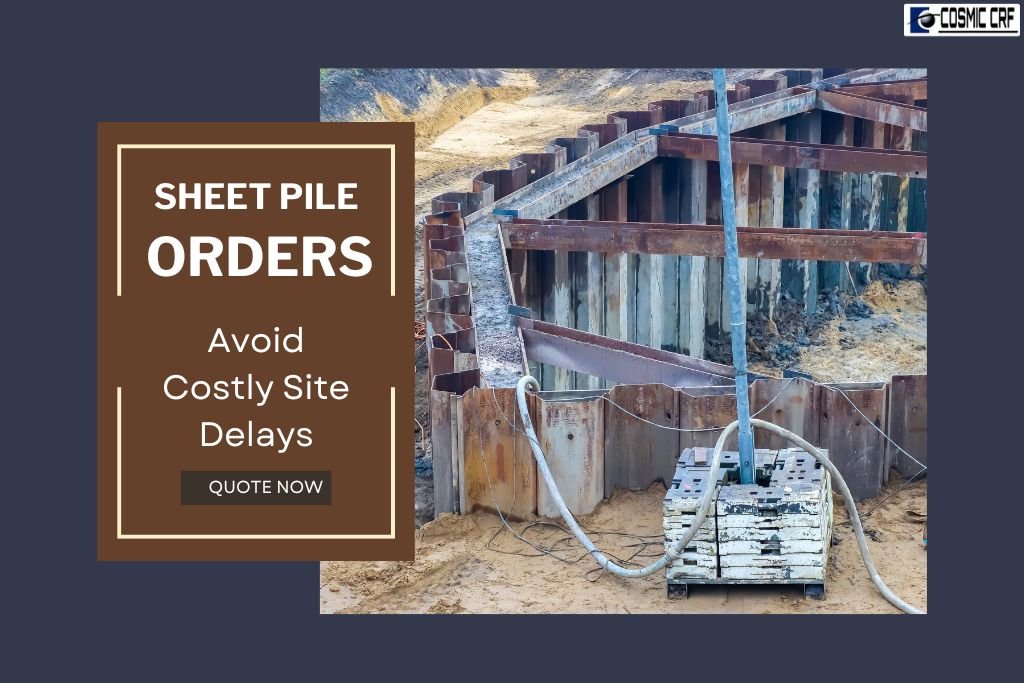
A sheet pile job can stall fast.
The rig stands ready, yet the piles on site fail to lock cleanly. The next truck arrives, and the lengths feel off for the cut plan.
Your team spends hours sorting bundles and rechecking marks.
Everyone looks at procurement, even when the order looked “fine” on day one.
Here are five things you should clarify to avoid site-level delays:
Interlock Compatibility Keeps Pitching and Driving Predictable
Interlock match sets the tone for the whole installation. Ask your designer or consultant which profile family the job expects, then match your order to that, not to a similar-looking section name.
Share whether the piles must mate with existing piles from an earlier phase, since interlocks vary by profile and by mill practice.
Call out any expected clutch type, interlock orientation, and pairing rules when you plan mixed lengths or mixed piles.
If the site uses sealant, water stop, or welded interlock points, state it early so the interlock area stays clean and consistent.
Length Tolerance and Cut Strategy Protect Your Level Control
Length clarity keeps you away from field-cutting obstructions.
Provide the design toe level, cut off level, and the allowance you want for driving set and trimming. Then define your tolerance as a number, plus the measurement method, such as end-to-end along the straight line.
Mention whether you accept a length band or whether each piece needs a fixed length.
If the job allows welded splices, specify splice location rules and inspection expectations for the splice. This helps your contractor plan welding, lifting, and pitching with fewer surprises.
Stacking and Packaging Details Prevent Damage and Slow Sorting
Stacking method affects straightness, edge damage, and how fast crews find the right piles. Put these details into the PO so the yard packs material in a usable form:
- Bundle composition: one profile per bundle, one length per bundle
- Tag data: profile, length, piece count, lot ID, heat reference
- Lifting method: lifting points, banding layout, sling location guidance
- Support spacing: number of timber supports per bundle and their spacing
- Protection: end guards or corner protection if handling stays rough on route
Driving Conditions Change What “Good Enough” Looks Like on Site
Driving conditions decide which details matter most. Share your driving method, such as vibratory, impact hammer, or press-in, plus any known ground conditions like dense sand, boulders, or stiff clay.
Mention expected refusal risk zones and the tolerances your contractor needs for straightness and twist in those areas.
If you plan driving guides, templates, or waling alignment control, tell the supplier what faces act as reference faces.
Also share any restrictions around coatings, since thick coatings near interlocks can affect the locking feel during pitching.
Delivery Windows and Release Documents Keep The Site Supplied on Time
Delivery planning works best when release rules stay clear.
Align dispatch dates with the contractor’s work front plan, not with a single bulk drop. Ask for lot wise packing lists that match bundle tags, so receiving teams trace material fast.
Confirm which documents must travel with every lot, such as mill test certificates, profile and thickness details, and a simple dimensional check record.
If a third-party inspector is involved, state the hold points early so dispatch stays smooth.
Final Thoughts
Site delays rarely come from one big issue. They come from small gaps that keep repeating: an interlock that binds, a length that forces extra cutting, bundles that arrive hard to sort, or paperwork that slows release.
Your best move is to lock these details inside the PO before the first truck leaves the yard. It saves rig time and keeps the crew focused on driving.
If you want to tighten the order before you release it, contact us at Cosmic CRF. Share your drawing, section profile, target lengths, and driving method. We will align interlock compatibility, length tolerance, packing method, and dispatch documents with your site plan, so material reaches site ready for pitching and driving.