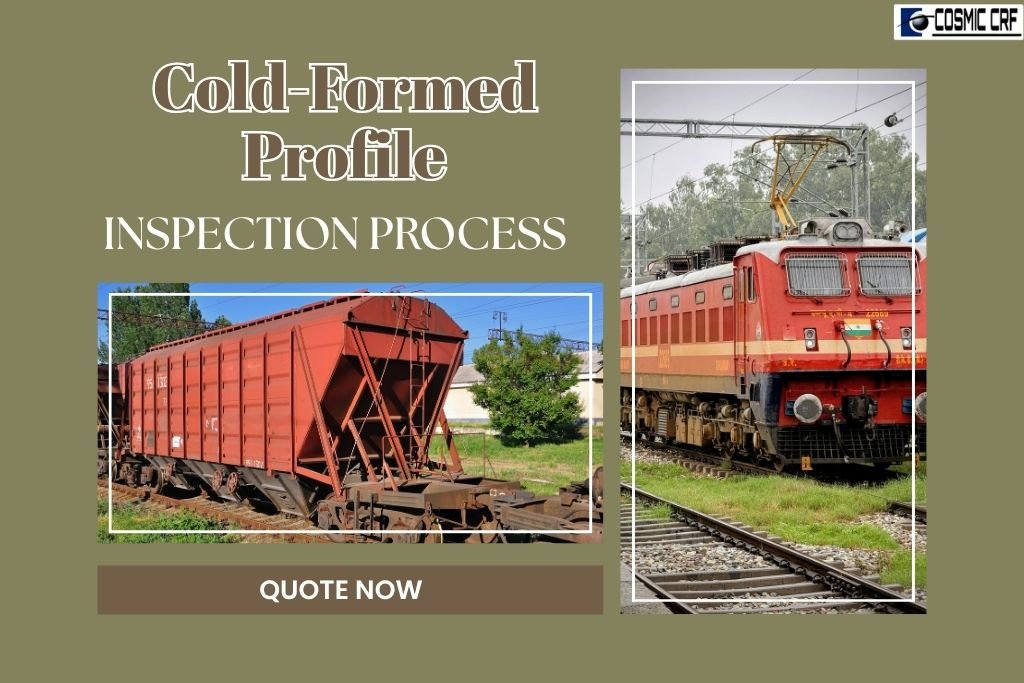
Cold-formed railway profiles pass through several production stages before they reach final use.
Because material selection, forming, cutting, and finishing can all affect the final section, inspection works best when it follows the production route rather than relying on a single final check.
Placing inspection points at key stages helps teams identify issues earlier, maintain control of the process, and confirm that profiles are ready for the next step.
Here’s how inspection points can be planned throughout the production process to support consistent quality and smoother downstream operations.
Define What Each Inspection Point Must Prove
Each inspection point should answer a clear question.
One check may confirm whether the input material matches the approved requirement, while another may confirm whether the formed profile still holds the intended shape after passing through the rolls.
This is important because too many broad checks can slow the team without giving useful control.
Engineers usually get better results when every inspection point has a purpose linked to material, shape, fit, traceability, or dispatch readiness.
A check that proves something specific becomes easier to record, repeat, and explain during production review.
Check The Inputs Before Forming
Inspection should begin before the profile enters forming.
The drawing revision, steel grade, thickness, coil condition, and material traceability need to match the approved requirement.
This stage sets the base for the full production run because every later check depends on the right input moving into the machine.
A wrong drawing revision or unclear material reference can create confusion after several sections have already been formed.
Input inspection gives engineers a cleaner start and helps the production team work with fewer doubts about what is being made.
Watch The Profile During Forming
In-process inspection helps catch shape movement while the section is still being produced.
Profile width, bend angle, flange opening, straightness, and twist should be checked at sensible intervals during the run.
Tool setting, coil behaviour, and handling pressure can change the section gradually, especially during longer production quantities.
A check during forming gives the team a chance to correct the direction before the same variation travels across more pieces.
This stage often gives engineers the most useful control because it sits close to the actual forming activity.
Check Finished Dimensions After Forming
After forming, inspection should move to features that affect fit and assembly.
Length, hole position, cut-out location, edge condition, and end finish need attention because these points usually matter during railway fabrication.
The section should also be reviewed for handling marks, local bends, or deformation that may affect clamping and fit-up later.
This is the stage that helps you confirm whether the formed profile is ready for use beyond the production line.
A good finished-dimension check connects the profile to its real job, not only to its shape on paper.
Use Dispatch Checks to Protect The Approved Profile
Dispatch inspection should confirm that the right sections are leaving in the right condition.
Marking, bundle identification, packing condition, quantity, and any required inspection record should be reviewed before release.
This check protects the work already done during forming, cutting, and finishing.
It also helps the receiving team identify and issue the profiles more easily once they reach the site.
For railway profiles, dispatch checks carry extra value because similar sections may travel together and enter different fabrication stages after receipt.
Final Thoughts
Inspection planning works better when it follows the way the cold-formed profile is produced, handled, and supplied.
The strongest plans place checks where they can prevent repeated issues and protect the next stage of work.
For railway CRF profiles, this approach supports better fit, cleaner assembly, and steadier acceptance at receipt.
Our work, at Cosmic CRF, with cold-formed railway profiles keeps this production route in view from the start.Get in touch with us today to discuss CRF profiles that need planned inspection from material input to dispatch.