
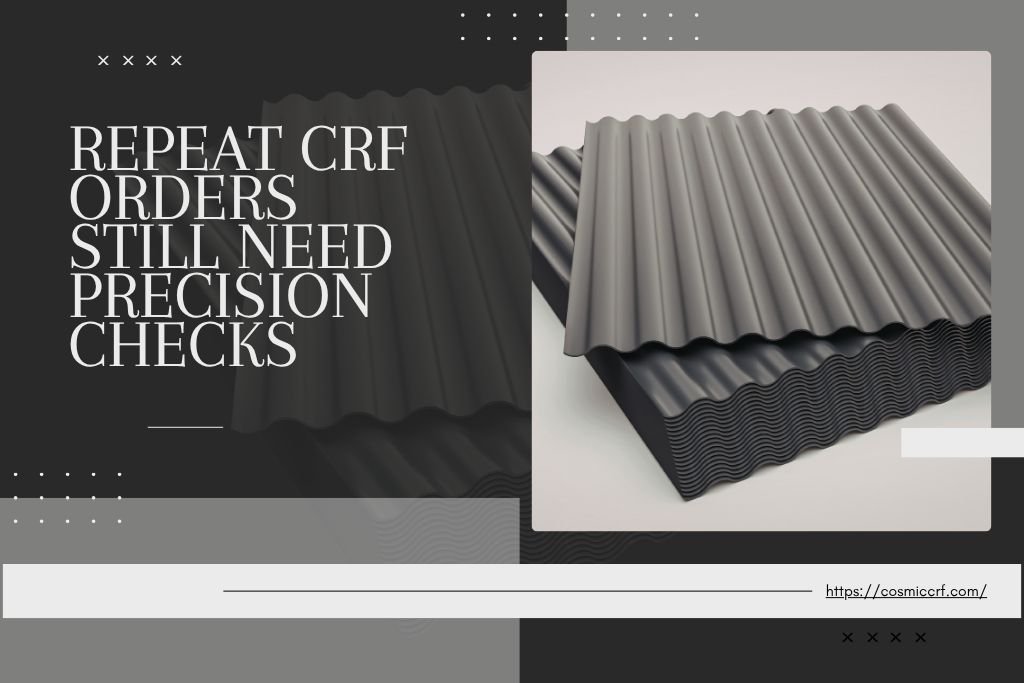
A repeat order often feels easier than a fresh one. The drawing already exists, the section name is familiar, and the team assumes the earlier specification will carry forward without much effort. Even so, small changes tend to gather quietly between order cycles, and they usually appear later when fabrication, fit-up, or dispatch is already moving.
A section can be the same in name and still sit inside a different project condition. Here are five areas that deserve a fresh look before a repeat CRF section order goes out.
The Drawing Set Deserves a Fresh Review Every Time
A repeat order usually begins with confidence, yet the surrounding job may have shifted since the last batch.
One project may use the section in the same way as before, while another may place it against a revised assembly, a changed hole pattern, or a tighter mating condition.
In that situation, an older drawing reference can travel much farther than expected and reach the shop floor as a fit-up issue.
A brief review of revision status, interface details, and reference dimensions often brings the full order back into line before production starts carrying old assumptions forward.
Material and Finish can Change The Behaviour of The Same Section
The profile may remain familiar while the manufacturing condition around it moves in a slightly different direction. Steel grade, thickness range, finish, coating, and handling expectations all influence how the section performs across forming, storage, fabrication, and final use.
A repeat order for outdoor exposure may call for a different finish than an earlier indoor application, and a section meant for welding may need a cleaner treatment than one meant for direct installation.
Once these inputs are reviewed with the current job in mind, the order begins to reflect present use rather than past memory.
Tolerance Expectations Often Tighten Even When The Section Stays The Same
A repeat section can enter a project where the assembly condition feels more exacting than before. The profile may have worked well in the last cycle, yet the next batch may meet different adjoining parts, closer jig conditions, or a more sensitive fit-up sequence.
In those cases, straightness, hole location, squareness, and edge quality start carrying more weight than the section name alone suggests.
A fresh tolerance review helps your team see whether the earlier acceptance logic still suits the current build and whether a small shift in expectation needs to be stated clearly on the order.
Inspection and Secondary Operations Should Follow The Current Job, not The Previous One
Repeat orders often carry over old inspection routines even when the fabrication path has changed.
A section that once moved as a plain formed profile may now require punching, cut-to-length control, part marking, or closer traceability for linked assemblies.
The earlier inspection plan may still hold value, though the current project may benefit from an updated first-off check or clearer bundle identification.
When inspection and secondary operations are reviewed with the present job in view, the order becomes easier to read, easier to verify, and easier to move through production with fewer pauses.
Packing and Delivery Logic can Shift More Than Buyers Expect
A repeat section order can still reach a very different delivery setup. One batch may move in full lots to a familiar workshop, while the next may need phased dispatch, clearer bundle marks, or a packing style that suits a different unloading method.
In some cases, the material reaches the site in the right quantity yet still slows handling because the bundles were grouped for transport convenience rather than for receiving and issue.
The section itself may remain unchanged, though the way your team receives, sorts, and releases it may have shifted.
A short review of lot logic, packing format, bundle weight, and delivery sequence often makes the material easier to identify and easier to issue once it reaches the yard or shop floor.
Final Thoughts
Repeat orders save time when the earlier specification still matches the current job in full, and that match deserves a fresh look more often than people expect.
Drawing logic, material condition, tolerance needs, inspection steps, and dispatch rhythm can all shift quietly between cycles even when the section name stays the same.
At Cosmic CRF, We see this regularly while working with cold rolled formed sections, where repeat manufacturing works best when the current use is read clearly before the order is released. If your next CRF section order looks familiar, a short specification review may be the step that keeps the batch, the paperwork, and the project moving together more smoothly. Get in touch with us to learn more.